How We Heal: Does the Legacy of Slavery Still Shape Black Wealth, Relationships, and Educational Achievement?
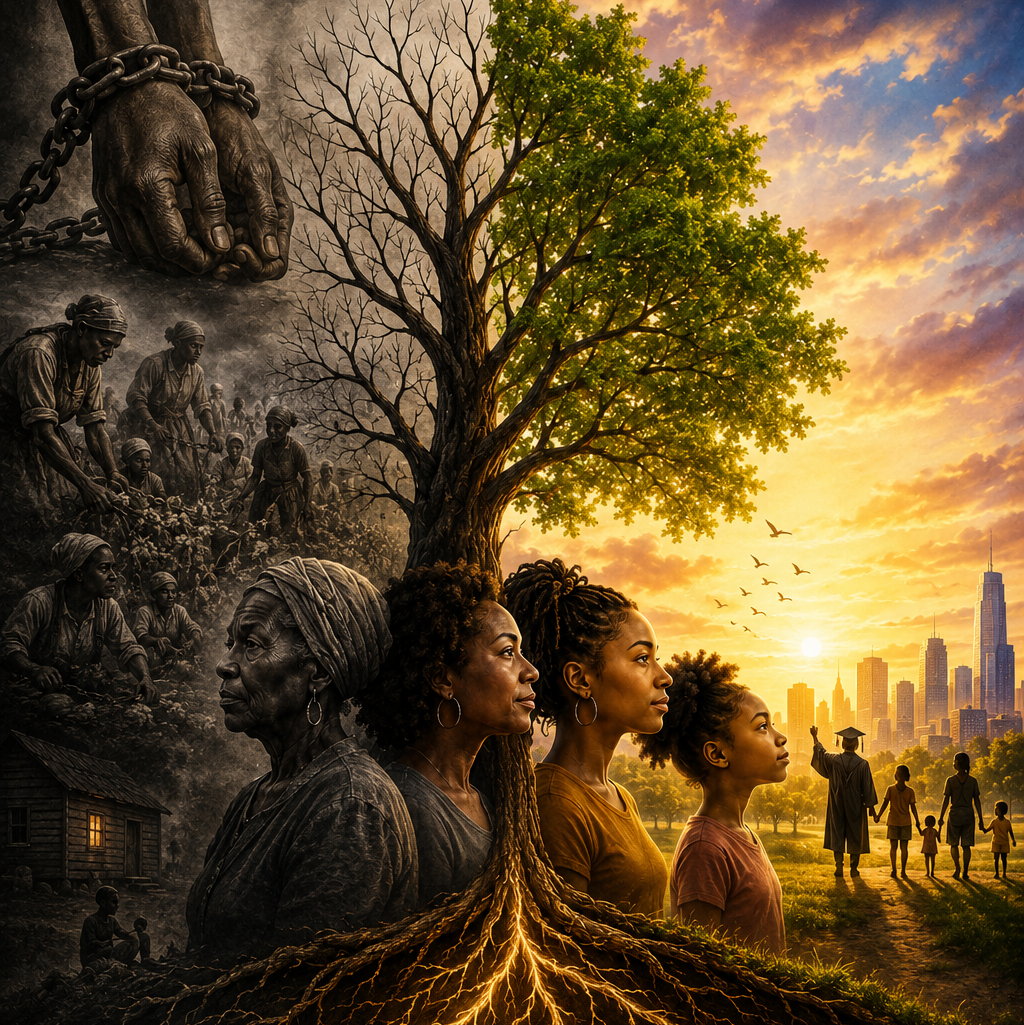
Many will read this and scoff at the idea that the past can profoundly shape the future. They will argue that looking backward—particularly at the pain and trauma of slavery—is merely an excuse, a scapegoat, or evidence of a victim mentality. They will point to the progress that has been made, the civil rights victories that have been won, and the extraordinary achievements of a strong, resilient, and resourceful people as proof that the past should no longer matter.
For these reasons, I need to be clear about something: My intention in writing this piece was not simply to put words on a page, but to provide a firsthand perspective shaped only by my lived experiences. These observations have been formed through years of living in a Black body, countless conversations, and more than 50 years of asking questions about what it means to be Black in America.
What I’ve learned is that pain does not always begin with the person carrying it.
Sometimes pain is inherited.
For African Americans, the trauma of slavery did not end with emancipation. The physical brutality, family separation, economic exploitation, and systemic dehumanization experienced during slavery created wounds that have echoed through generations. Researchers often describe this phenomenon as intergenerational trauma — the transmission of emotional, behavioral, and social consequences from one generation to the next.
The transmission of pain is not about blaming previous generations. Our ancestors survived unimaginable circumstances and often did the best they could with the resources available to them. However, understanding how historical trauma continues to shape our communities is essential if we hope to heal and create healthier futures.
Below are three ways pain has been passed down within Black communities — and what we can do to interrupt the cycle.
1. Economic Trauma and the Wealth Gap
Slavery denied Black Americans the opportunity to accumulate wealth for more than 250 years. Following emancipation, discriminatory policies such as Black Codes, sharecropping, redlining, and employment discrimination continued to limit economic opportunity.
The consequences remain visible today. According to data from the Federal Reserve, the median wealth of White families is several times greater than that of Black families. The median wealth (or median net worth*) of White households is $284,310, while the median wealth of Black households is $44,100. In other words, for every $100 in wealth held by White families, Black families hold approximately $15.
This wealth gap affects housing, educational opportunities, entrepreneurship, retirement security, and the ability to pass assets to future generations.
Because many Black families have experienced generations of economic instability, financial fear often becomes part of family culture. Children may grow up hearing messages such as:
- “Don’t take risks.”
- “Just get a stable job.”
- “We can’t afford mistakes.”
While these beliefs are understandable, they can sometimes discourage entrepreneurship, investing, and long-term wealth building.
How We Heal
- Teach financial literacy in homes, schools, and churches.
- Normalize conversations about investing and wealth building.
- Support Black-owned businesses and community economic development.
- Create estate plans and intentionally transfer assets to future generations.
Healing economic trauma requires moving from survival thinking to legacy thinking.
2. Family Separation and Relationship Challenges
One of slavery’s most devastating practices was the routine separation of families. Husbands, wives, parents, and children were bought and sold as property. Family bonds were repeatedly broken by force.
Generations later, many Black families continue to navigate the effects of disrupted attachment, fears of abandonment, and distrust. Researchers have found that traumatic experiences can influence parenting styles, relationship behaviors, and emotional development across generations.
Family separation also has a significant impact on wealth building and quality of life. A 2021 study by the Institute for Family Studies found that married Black Americans have more than three times the wealth of their unmarried peers — approximately $230,000, compared with $65,000.
According to Essence magazine, Black Americans have the highest divorce rate among the nation’s major racial and ethnic groups. Data cited by the publication indicates that only 30% of Black adults are married, compared with 48% of the overall U.S. population. Fifty percent of Black adults have never married, compared with 34% of the general population. Divorce is also more common among Black women (38.9%) and Black men (38.7%) than among other racial and ethnic groups.
In many families, expressions of love were replaced by lessons in survival:
- “Be strong.”
- “Don’t cry.”
- “Handle it yourself.”
While resilience is a strength, emotional suppression can create barriers to intimacy and healthy communication.
How We Heal
- Normalize counseling and mental health support.
- Practice emotionally healthy communication.
- Create safe spaces where vulnerability is viewed as strength rather than weakness.
- Build relationships based on the spiritual principles of forgiveness, understanding, and grace.
Healing begins when we give ourselves permission to feel, process, and express emotions that previous generations may never have had the opportunity to address.
3. Educational Mistrust and Internalized Limitation
During slavery, educating enslaved Africans was often illegal. Knowledge was viewed as a threat to the institution of slavery. Even after emancipation, Black communities faced segregated schools, unequal funding, and barriers to higher education.
Although Black Americans have made extraordinary educational gains, remnants of historical oppression can still appear in the form of self-doubt, imposter syndrome, and limited expectations.
Many Black students continue to encounter environments where their history, contributions, and experiences are underrepresented. This can contribute to a belief that success belongs to someone else rather than to them.
At the same time, generations of exclusion have fostered mistrust of institutions that historically failed Black communities.
How We Heal
- Teach accurate Black history throughout the year.
- Increase Black representation in educational materials.
- Mentor young people and expose them to diverse career pathways.
- Celebrate intellectual achievement as much as athletic and entertainment success.
Education remains one of the most powerful tools for breaking cycles of inherited pain.
Moving from Pain to Purpose
The story of Black America is not simply a story of trauma. It is also a story of resilience, creativity, faith, innovation, and triumph.
Our ancestors passed down more than pain.
They passed down courage.
They passed down wisdom.
They passed down an unbreakable determination to survive circumstances designed to destroy them.
The challenge before us is to honor their sacrifices while refusing to pass unresolved wounds on to future generations.
We cannot change the past, but we can change what we hand to our children.
The passage of pain can become the passage of healing.
The passage of fear can become the passage of faith.
The passage of trauma can become the passage of transformation.
And that work begins with us.
* Net Worth (Wealth) = Total Assets − Total Debts
Follow us on the Black Writers Workspace, http://www.blackwritersworkspace.com or purchase books by Michelle Jackson at http://www.authormichellejackson.com.

