Hate is too great a burden to bear…


There is a spiritual lesson in the making of a patchwork quilt. An early American pastime, the art of quilting used the imaginative designs crafted by women gathered in a quilting bee. Patchwork blocks made from fabric scraps and salvaged material accumulated from memorable events and treasured possessions are stitched and sewn into individual designs then aggregated into useful pieces. Colorful and oddly shaped fabric is cut, assembled and attached to create a complete work of art with three layers – the patchwork, the insulation and the backing – which is mended into a quilting masterpiece that is often passed down from generation to generation.
When I think of God’s masterful work to make me whole I see my life as a patchwork quilt. Scraps and salvaged parts of a life well-lived but often hard-fought cut, paired, and mended together by the hands of a loving God. Each patch exemplifies my faith, my character and my capacity to love. Each layer is insulated by the Word and the strength of my salvation. God is my Potter, my Maker, my Restorer and my Redeemer. Through His craftsmanship He has turned this spoiled vessel into something new. And He has transformed the tattered pieces of my life and restored me into a purposeful and enduring believer.
God has taken the jagged edges of my faith and cut away the doubt and uncertainty. He took the rough and uneven ends of my spirit and smooth away the unmanageable parts. God attacks the obscurity of sin that seeps into my mind and leaves me with the courage, through His salvation, to stay strong and to move forward with confidence.
I am His work of art. Tattered, bruised and weak, I am made strong through the love of an omnipotent God. Even in my brokenness he can craft me into something whole. His Word insulates my life and reminds me that the real work to living out my destiny is done inside and not on the peripheral of my flesh. My backing, or my foundation, is God’s love – a sweet but firm fortress of strength that keeps me humble and strong.
A Christian’s life is a work in progress. There is no day that passes that God isn’t cutting, pairing and mending our broken parts to make us whole again. He is the Creator of all things good. Resting in His arms guarantee us that we will be equipped and restored, beautifully packaged and secured through His love.
Jeremiah 18:3-4
Then I went down to the potter’s house, and there he was, making something on the wheel. But the vessel that he was making of clay was spoiled in the hand of the potter; so he remade it into another vessel, as it pleased the potter to make.
2 Corinthians 4:7
But we have this treasure in earthen vessels, so that the surpassing greatness of the power will be of God and not from ourselves.
Isaiah 64:8
But now, O LORD, You are our Father, We are the clay, and You our potter; And all of us are the work of Your hand.
Michelle D. Jackson is author of The Heart of a Man, a Christian novel and Founder of The Charity Supper Club, a program designed to raise money to benefit local charities and families in need.
This piece was printed in the March 2015 issue of The Mount Christian Lifestyle Magazine.
Check out my latest blog post, Time to retire the n word.
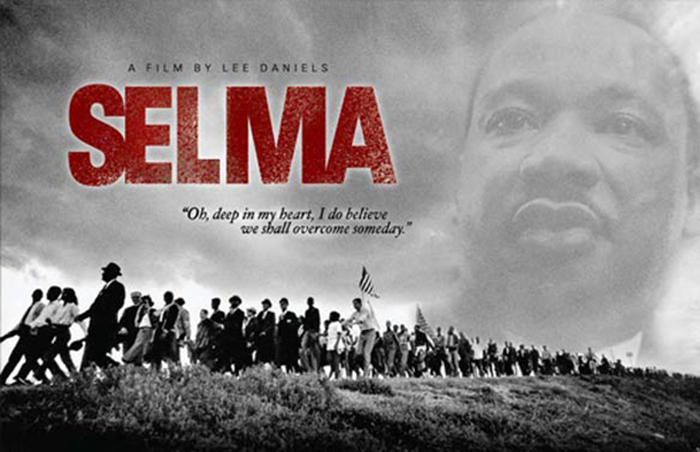
It’s time to retire the n word. That’s what the movie Selma has taught me. To see people fight without violence, without immobilizing fear and without selfish intentions for our right to vote, I am positively sure that we should kill and bury the n word and replace it with something more suitable for describing who we really are. We should be using words like warriors, survivors, champions, heroes, fighters, brave-ones…I believe that when we change what we call and how we see ourselves we will change our expectations of the future. The people who marched in Selma were fearless heroes, now that’s what I want to be called one day.

Over the next 24 hours millions of people will set goals for the New Year. Typical resolutions will be a laundry list of positive changes like weight loss, spiritual growth and financial stability. Most goals will be realistic and achievable and others will be too whimsical to set in motion.
But the idea of leaving one year behind and diving head-first into the next is refreshing. It’s a chance to start over, to get life right and to forgive yourself for the mistakes of the past 365 days. It is the finish-line for wrapping up unresolved issues and the starting point for reinventing your life.
This year, I’ve decided to take a different approach to setting my personal and professional goals. Of course I plan to eat healthier, love harder and seek peace in everything I do, but my primary goal will be unlike my goals of the past.

Check out my article in the Nov. Issue of The Mount Christian Magazine.
To view the complete November issue of The Mount Christian Magazine, go to
http://mt-ararat.org/images/MtMag_November2014.pdf http://wp.me/p4xDb7-39

Have you ever watched an innovator convert an idea into a practical concept, mold that concept into a viable business model then employ an operational process that allows a new venture to spread its wings and soar? If not, you should, because the sheer curiosity and eagerness of a dedicated business leader is inspirational beyond words.
It takes commitment to start a business.
It takes boldness to put forth an innovative idea.
It takes heart to see it through to the very end.
For those of us privileged to work with business trailblazers, we’ve witnessed many new ideas take flight. But in order to help these pilots stay above the clouds, both public and private sectors must do more to avoid putting roadblocks in their path.
Innovation is the idea of thinking differently about how we do things. In many ways it is the key to building a better world. From the development of the polio vaccination to the creation of the Internet and beyond, when we inhibit innovation by not providing the resources needed to mature an innovator’s dynamic ideas, we are also hindering our own personal and professional growth.
Innovation should never be contained, stored or leashed. To grant it the freedom it needs to change the world, it must be unfettered then fueled. But the fueling becomes the problem. In order to properly drive innovation public and private sectors must create pools of resources accessible to both thriving ventures and start-up companies. In a perfect world, every program created in the name of entrepreneurship would offer hefty funding resources, mentorship and collaborative opportunities. But we live in the real world. With countless limits on capital resources for new businesses and political opposition to funding more research and development, roadblocks to innovation will continue to exist over time unless we act now.
So, how can we give innovation the freedom to thrive? Here are my three ideas to help public and private sectors broaden their view of the needs of entrepreneurs:
Money matters. You’ve heard it a million times: access to capital is key. Well, it is. No company succeeds without financial support. Call it what you want – crazy, ill-conceived or unorthodox – but the process of creating new technology is a lot like throwing spaghetti at the wall. You sling it until it sticks and when it does, you peel it off, figure out what made it stick in the first place then do it all over again. But if every sling at the wall costs $50,000 or more, innovators may only get one chance at success. Therefore, the key is to ensure that all public and private entrepreneurial programs develop strategies that will provide multiple layers of funding for companies at each stage. One shot just isn’t enough.
Failure isn’t final. Public and private entrepreneurial programs should be designed with failure in mind. In a recent Forbes magazine article, “Why is Innovation so Hard?,” writer Edward D. Hess discusses a key factor in what hinders us from accepting failure. He writes: Our educational system and most work environments have taught us that good performance means avoiding failure, not making mistakes. This is a big problem, because failure is an unavoidable part of innovation experimentation.
Innovation requires the willingness to fail and learn. But failure comes at a cost that most investors don’t want to take on. Innovators with great ideas often fail at the early-stage because of a lack of financial support. Programs created to help them often offer assistance worth the value of one sling at the wall and nothing more. To change this, we must shift our psychological acceptance of failure and instill new ways of thinking into public and private program development. Although failure may be final to most investors, to a serial entrepreneur it is often the beginning of a new onslaught of creative ideas and concepts that deserve a chance at success.
Supporting the best and disregarding the rest is no way to build a successful entrepreneurial ecosystem. The best of the best technologies can be found at the least attractive places. Great ideas can come from anywhere. From basements in an urban community to labs at junior colleges, entrepreneurial programs should throw out the status quo and start looking for great inventions in some of the most unlikely places. We must learn to support business growth at all levels and create new avenues for innovators to get the recognition they deserve regardless of their educational background, income level or geographical location.
Simple stuff, right? We will see….
Check out my latest blog post, The First Thirty-Nine.
A few months ago I celebrated my fortieth birthday. Unlike turning 35, I wasn’t concerned about getting older instead I embraced the change and welcomed the big 4-0 with opened arms. I was excited, I must admit, because I’d heard that 40 brings new opportunities to get life right and the boldness to forgive yourself when you can’t.
In the midst of my excitement, I decided to share a piece of what makes this new start in my life so wonderful. So brace yourself, here’s a peek at what the first thirty-nine taught me:
For me, success is finding peace and happiness in all my endeavors in spite of titles, money and power. It is waking up early on a Saturday morning and writing something beautiful that no one will ever see but me. It is looking at my image in the mirror and loving all that God has created. It is sharing myself with those I love and learning to move away, gracefully, from those I can no longer support. My definition of success is finally achievable and that’s the best lesson of all.
I hope the next forty years will be filled with opened doors and new opportunities to put all my life lessons into play. I am looking forward to expanding my consciousness in ways only age and grace will allow. But because of the first thirty-nine, I am even more excited for the ride and well-prepared for the journey.
FIND me, LIKE me, SHARE me on Facebook https://www.facebook.com/pages/Author-Michelle-D-Jackson-The-Heart-of-a-Man/157702567608080

In response to the recent killing of an unarmed teen in St. Louis, my family invite you to join us in a Social Media Community of Prayer Campaign this Sunday, AUG 16th between 10 – 10:30 am (EST). To participate, we are asking everyone to do two things. First, pray on your own for something you want to change in your community on a National, State or Local level; no conference call or email will be set-up or necessary. Second, use the comment line below to add what you will be praying for so everyone can pray with you. Your comments will be a part of the Campaign Prayer List. As Christians, we believe prayers do change things! Hope you can join us because our communities today desperately need our prayers.
 1st Morning Thoughts
Written
on November 12, 2014